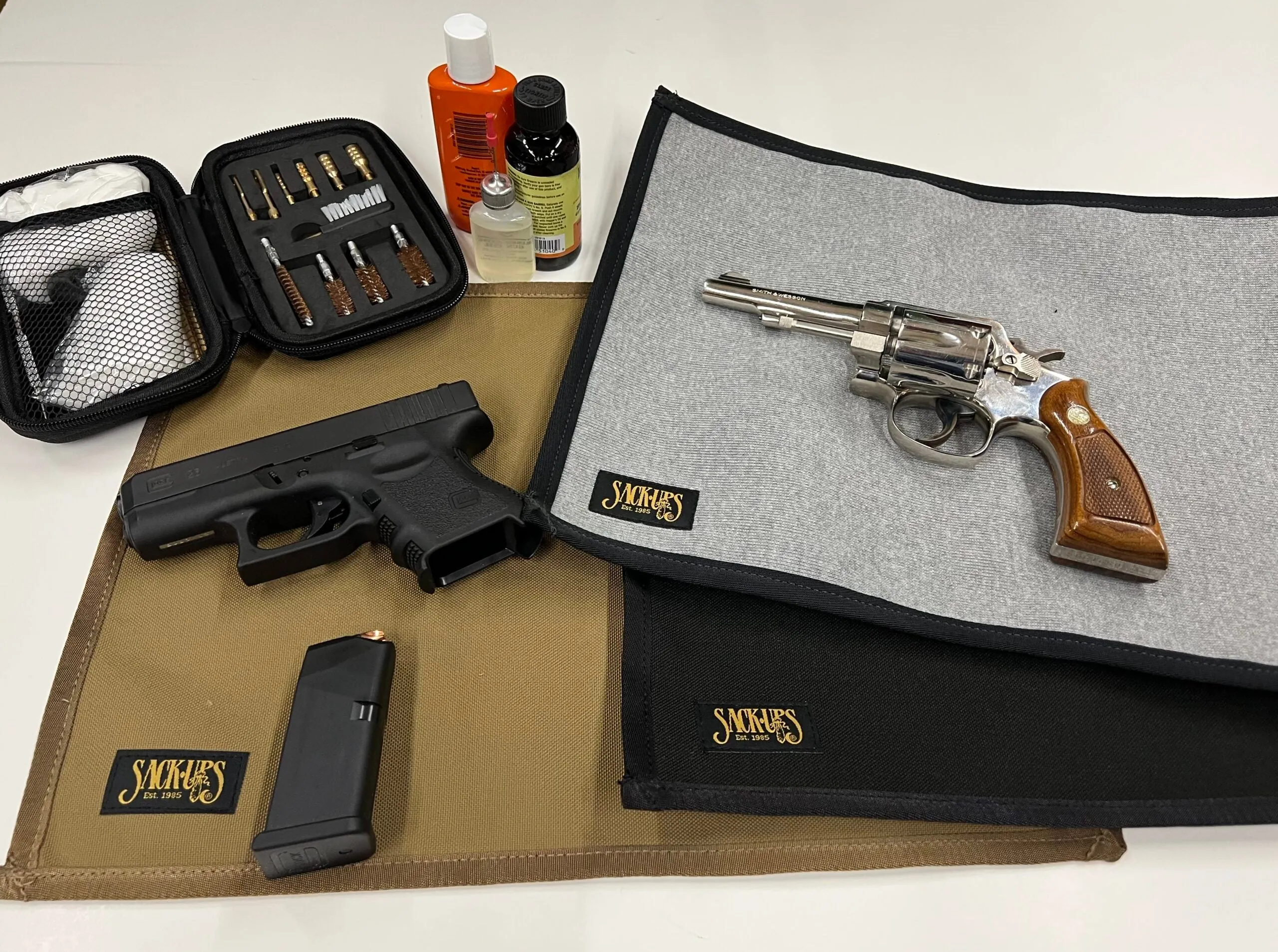

Knowing how to store a handgun starts with a routine you can repeat after every range day, cleaning session or trip afield. Make the handgun safe according to the manufacturer’s instructions, remove the ordinary dirt and moisture that came home with it, make sure any storage material is dry, then return it to a secure place with enough room to use comfortably. The goal is not a complicated ritual. It is a clear, dependable system that makes the next inspection and the next outing easier.
Every handgun, household and climate is different, so the manufacturer’s guidance and applicable laws come first. This practical guide focuses on the details that can be easy to overlook in a busy safe or cabinet: a rushed return after the range, fingerprints on a finish, a damp range bag, sleeves that need cleaning and shelves that become crowded a piece at a time.
1. Begin with safe, deliberate handling
Storage begins before the handgun reaches the safe. Follow the unloading procedure in the owner’s manual, keep the muzzle in a safe direction and take the time to confirm the firearm is unloaded before it is cleaned, covered or put away. The National Shooting Sports Foundation’s firearm safety rules emphasize treating every firearm as if it is loaded and keeping firearms unloaded when they are not in use. That deliberate pause is the most important part of the storage routine.
Keep ammunition separately secured according to your household plan and applicable requirements. The point is to make the transition from use to storage unmistakable. Finish handling the handgun, complete the safety and care steps, then return it to its assigned location. Avoid treating the safe shelf, a range bag or a workbench as a temporary holding area where a firearm can sit forgotten between other tasks.
Before moving the handgun, look for the small details that can make storage awkward: a loose optic cover, a holster that trapped dirt, a light that changes the profile or a magazine and accessory that need their own spot. A few seconds of preparation makes it less likely that you will snag a sleeve, bump another item or turn an easy return to storage into a rushed one.
2. Clean and dry the handgun before storage
Rain, humid air, sweat, dust, fingerprints and residue from a long range day can follow a handgun home. Do not place that moisture straight into a closed storage space. Let the handgun settle in a dry indoor area, then inspect the exterior and the areas the manufacturer identifies for routine care. A clean cloth can take care of ordinary surface moisture and handling marks, while more involved cleaning and lubrication should follow the owner’s manual and the directions for the products you use.
Pay attention to the places that can stay damp longer than expected, including under grip panels where applicable, around mounted accessories, in a holster or around a sight cover. If the range bag, holster or sleeve was exposed to rain, a wet vehicle floor or a dirty bench, let that material dry fully as well. A carefully cleaned handgun placed inside damp fabric has not really been prepared for storage.

Keep the care routine realistic. More oil or more cleaning product is not automatically better, especially when a product is not recommended for a particular finish or component. Use the handgun manual as the authority for maintenance intervals and approved products. The Sack-Ups gun-maintenance collection can help keep everyday supplies organized, but the firearm maker’s instructions should guide the work.
3. Choose secure storage before choosing an accessory
A protective sleeve is useful only after the storage location itself has been chosen. Start with a secure-storage method that limits unauthorized access and fits your household and applicable requirements. Project ChildSafe’s safe-storage guidance makes a useful point: secure storage works best when it is a dependable habit, not something reserved for a special occasion.
Look beyond the lock. The storage space should be reasonably dry, easy to inspect and free from the risks that come with leaks, dramatic temperature swings or wet gear left nearby. A garage, outbuilding or basement may require more attention than a stable interior space. Wherever the handgun is stored, arrange the space around the conditions you can realistically monitor and maintain.
For a handgun that travels often, complete the trip home before storage starts. Follow the required transportation rules for the route and destination, then unload and inspect the firearm, remove obvious dirt and moisture and return it to the secure location. Do not leave it in a vehicle or a temporary travel case longer than necessary. Those spaces are harder to monitor and are not a substitute for the secure storage plan at home.
4. Give each handgun a clear, uncrowded position
Handgun shelves fill up quickly. A few pistols, a revolver, spare accessories, cleaning supplies and range gear can turn a useful shelf into a crowded stack that is hard to inspect. If you have to drag one handgun across another item to take it out, the shelf needs more clearance. The best storage arrangement is not the one that squeezes in the most gear. It is the one you can use safely, understand at a glance and reset without frustration.
Store the handguns you use most where they are easy to see and remove. Give larger frames, long-barrel revolvers and handguns with mounted optics the room their profile actually needs. Keep loose tools, documents, cases and cleaning supplies in a separate zone instead of letting them build up beside the handguns. A little open shelf space is useful. It gives you a predictable route when returning a firearm and makes a quick visual inspection far easier.

For a mixed collection, the firearm-storage collection helps compare options for rifles, shotguns, handguns and scoped firearms. Our guide to gun safe organization also covers practical ways to group firearms, set aside room for accessories and keep routine checks simple. The aim is to give every item a reasoned place, not to buy more organizers than the safe can sensibly hold.
5. Use a clean, properly fitted sleeve as one layer of protection
A handgun sleeve does not replace secure storage, safe handling or manufacturer-recommended care. It is a soft layer between the firearm and the surfaces around it during storage and transport. That can be particularly useful on a shelf where handguns share space with each other, dividers, a safe interior or carefully organized range gear.
Fit matters. A sleeve that is too short leaves part of the handgun exposed. One that is too tight can snag on a longer barrel, larger grip, mounted optic or other feature that changes the outline. Measure the complete unloaded handgun from end to end and account for the details that add length or bulk. The Sack-Ups fit guide gives a practical starting point for comparing common handgun sizes.
For compact pistols, the smaller models may be the right answer. Many full-size handguns and revolvers need the room of the 13.5-inch Model 200, while a larger frame, longer barrel or mounted optic may call for the 17-inch Model 204. The pistol socks guide lays out the available sizes and the kinds of handguns they are commonly chosen for. A sleeve should make the storage routine easier to repeat, not turn it into a wrestling match.
6. Keep the storage environment visible and maintainable
Moisture control works best when it is easy to see. If your secure-storage setup uses a dehumidifier, desiccant container or another moisture-control method, put it where you will notice it during a routine check. Follow its instructions for placement, recharging and replacement. Do not bury it behind boxes, range bags or a stack of cases where it becomes a forgotten detail.

Set a calendar reminder for a regular check, especially after a wet outing or a seasonal weather change. During that check, look for dust, damp fabric, signs that a storage product needs attention and shelves that have gradually become too tight. The goal is not to disturb the collection constantly. It is to notice a changing condition before it becomes a larger cleanup or repair job.
Give the shelf itself the same attention. Dust, grit and loose hardware do not belong where handguns are stored. Wipe the surface when needed, remove anything that does not serve the storage setup and make sure the space is still easy to reach without shifting unrelated gear. A clean shelf is easier to inspect, and it makes it easier to see when a sleeve has picked up dirt or a storage condition has changed.
It also helps to keep storage materials separate by use. A dry sleeve that stays in the safe should not be tossed into a wet range bag and returned without checking it. If a holster, case or sleeve has been used outside, let it air out and inspect it before it goes back into the secure storage area. Those small distinctions prevent a clean storage space from slowly taking on the conditions of the last trip.
A handgun safe and a long-gun safe may need different layouts, but the logic is the same. Keep the condition of the firearms, sleeves and moisture-control supplies easy to review. Our rifle storage guide and shotgun storage guide offer the same practical approach for longer firearms that may share the same room or safe.
7. Use this handgun storage checklist
Once the storage space is organized, the routine can be short. Use this checklist after a range day, a cleaning session or extended handling:
- Follow the manufacturer’s unloading procedure and confirm the handgun is safe before storage.
- Keep ammunition separately secured according to your household plan and applicable requirements.
- Wipe away ordinary moisture, dirt and fingerprints, then complete any manufacturer-recommended care.
- Let the handgun, holster, sleeve and any case dry completely before closed storage.
- Return the handgun to its assigned position with enough clearance from other firearms and gear.
- Check that the safe or other secure storage space closes without interference.
For longer breaks between uses, add a routine inspection. Follow the manufacturer’s recommendations and adjust the schedule to your local climate and storage conditions. A regular check is easier when every handgun has a consistent place and the storage space is not packed beyond what you can comfortably use.
How Sack-Ups supports handgun storage
Sack-Ups is made for the time between use and storage. A properly fitted silicone-treated cotton sleeve gives a handgun a soft layer during transport and in a shared storage space, helping reduce casual contact with the surfaces and gear around it. It works best as part of the complete routine: a secure location, a clean dry handgun, clear spacing and regular inspection.
Start with the fit guide when you know the handgun’s overall length, or browse pistol socks for storage and protection to compare compact, standard and larger options. For several handguns that share a shelf, the five-pack can give each one its own soft layer. The goal is simple: give the handgun a clean, secure and predictable place to rest until the next outing.
Frequently asked questions
What is the best way to store a handgun at home?
Store a handgun according to its manufacturer’s guidance and applicable laws in a secure location that prevents unauthorized access. Before storage, follow the unloading procedure, make sure the handgun is clean and dry, keep ammunition separately secured and leave enough clearance around it for safe removal.
Can I store a handgun in a pistol sock?
A clean, dry and properly fitted pistol sock can provide a useful soft layer during storage and transport. It does not replace secure storage, routine inspection or the firearm manufacturer’s care instructions, and the sleeve should be dry before it goes into a safe or cabinet.
Should I keep a handgun in its case for long-term storage?
A travel case is useful for transport, but it should not hold moisture, dirt or wet fabric around the handgun. Let both the handgun and its storage materials dry fully before closed storage, then follow the manufacturer’s guidance for long-term care.
How often should I inspect a stored handgun?
Follow the manufacturer’s recommendations and check the secure storage area on a regular schedule, especially after seasonal weather changes or a wet outing. Look for moisture, dust, worn storage materials and a shelf that has become crowded or difficult to use.