A well-organized gun safe does more than make room for one more firearm. It makes a collection easier to inspect, easier to retrieve and less likely to pick up scratches when the door opens. Start with clear zones for long guns, handguns, gear and care supplies, then leave enough room to remove one firearm without shifting the rest. The best setup is not the one with the most accessories. It is the one that gives each firearm a clear place, keeps storage conditions in view and makes routine care simple.
These gun safe organization ideas focus on practical habits that work in a small residential safe or a larger collection. Start by handling every firearm responsibly, following the manufacturer's guidance and your applicable laws. The National Shooting Sports Foundation's firearm safety rules are a useful baseline: treat every firearm as loaded, keep the muzzle in a safe direction and keep fingers off the trigger until ready to shoot. For long-term household storage, Project ChildSafe also emphasizes secure storage that helps prevent unauthorized access.
Start with a clean, honest inventory
Before buying organizers, empty the safe one item at a time and make a simple list of what actually needs a home. Group firearms by type, length and how often you use them. A hunting rifle used every fall does not need the same grab-and-go position as a range pistol or a defensive firearm. Separating those roles is the beginning of an organized safe.
Look for friction points while the shelves are clear. Maybe two scoped rifles touch when the door closes. Maybe handguns get stacked because there is no shelf plan. Maybe cleaning supplies live beside finished wood and metal. These are not failures. They are the clues that show where a little order can protect a lot of value.
Make note of each firearm's overall length before choosing its space. The Sack-Ups Buyer's Guide is a useful starting point for comparing common rifle, shotgun, carbine and handgun sleeve sizes. Give firearms with optics, tall sights or wider stocks the room they need instead of forcing them into a tight row.
Create zones before you fill the safe
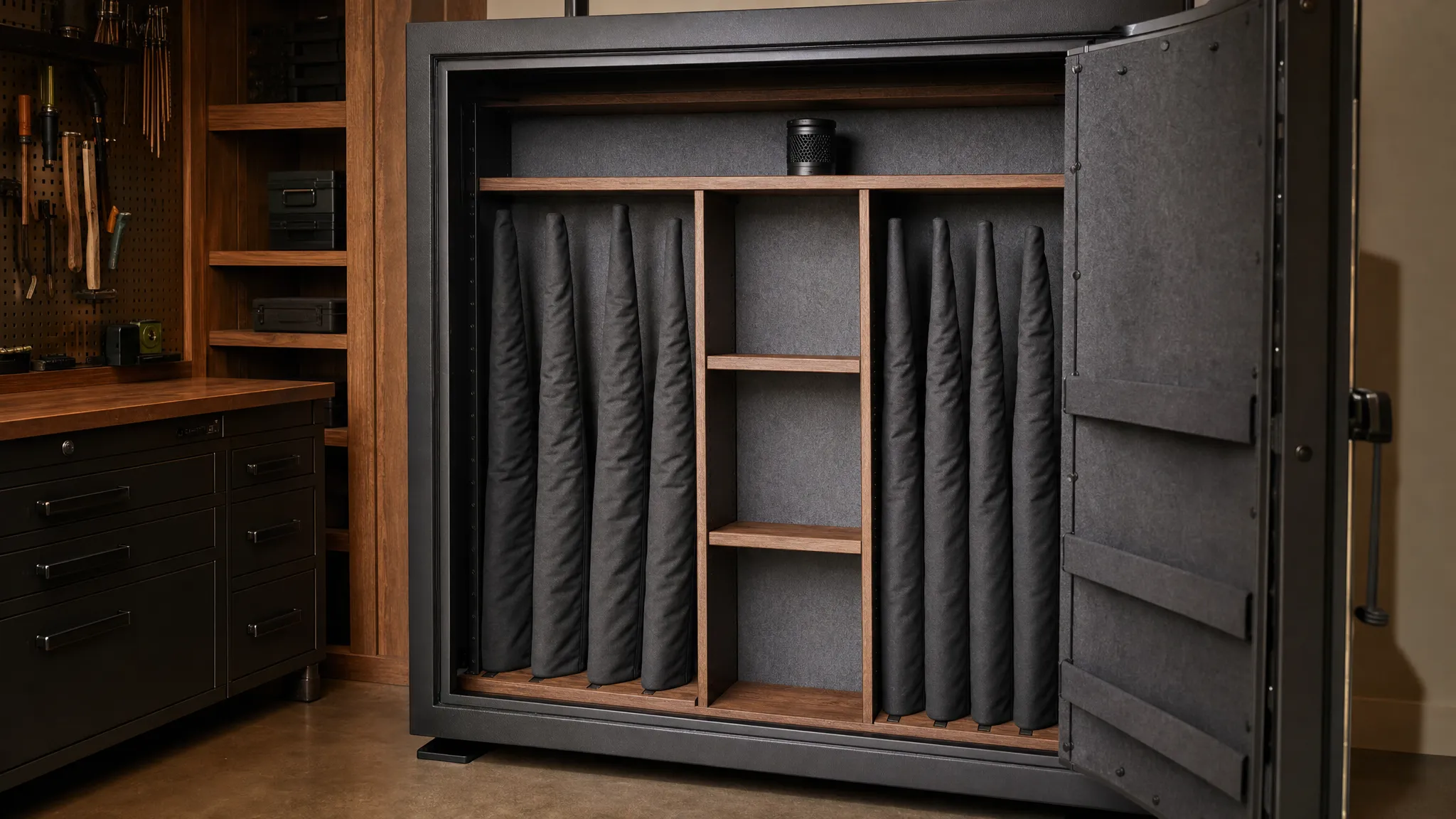
Think in zones rather than in a single pile of gun-safe storage. Give long guns a vertical area, handguns their own shelf or rack, maintenance supplies a contained spot and documents a dry, separate location. Once a zone has a job, it is much easier to return things to the right place after a range day or hunting trip.
Keep the most frequently used firearms in the positions that are easiest to reach without leaning a firearm against the door or dragging it across another one. Reserve less convenient positions for long-term storage pieces. This simple choice reduces unnecessary handling, and fewer awkward movements usually means fewer bumps and scuffs.
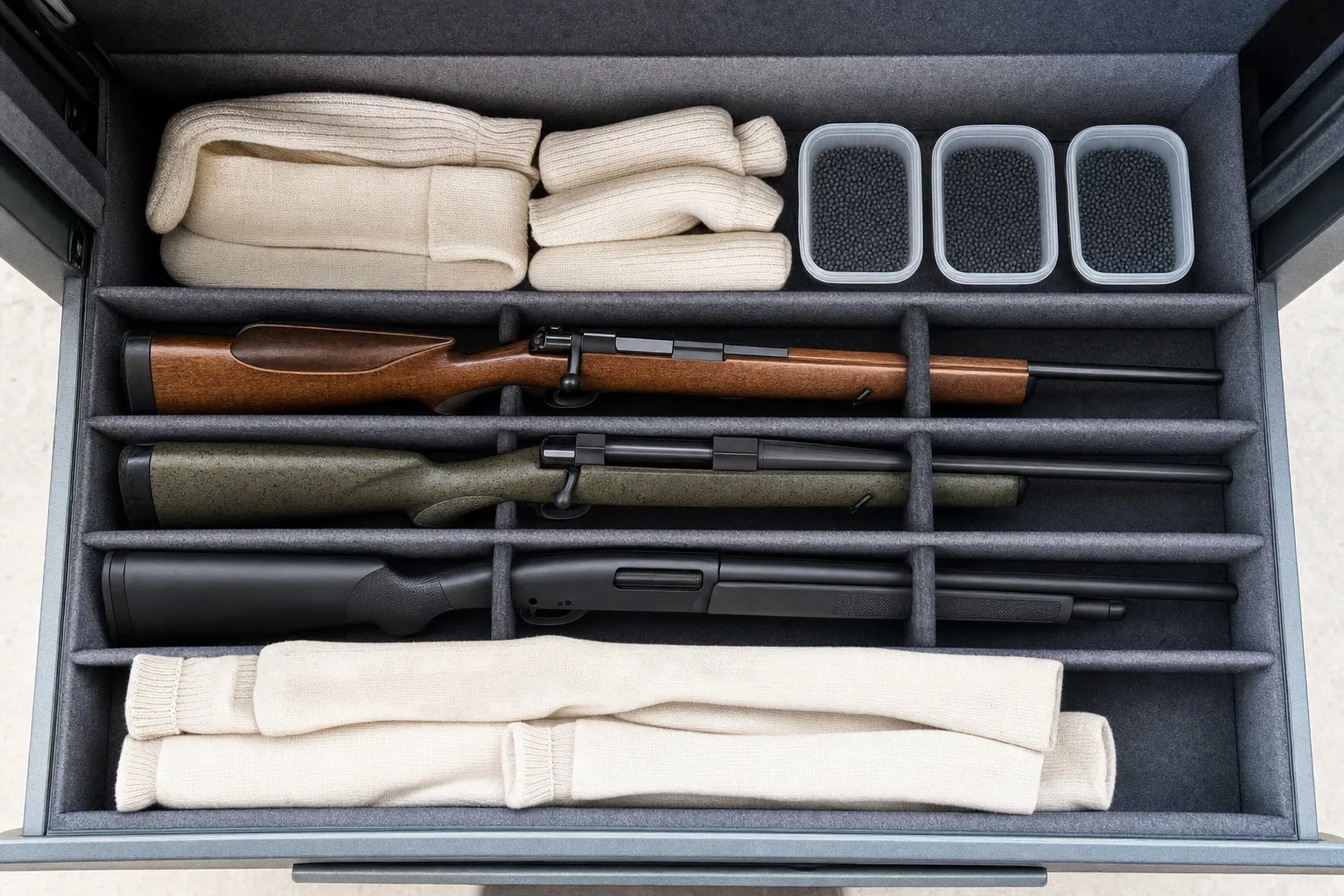
Door panels, small bins and shelf trays can be helpful, but only when each one solves a real problem. A shallow tray for keys, manuals or a light is useful. A loose bin full of mixed accessories is just another place for clutter to gather. Keep any storage item from blocking the safe's locking bolts, fire seal or interior door movement.
Plan the door and shelves around real use
The inside of the door is valuable space, but it works best for flat, light and frequently checked items. Use it for a small document pouch, a flashlight, hearing protection or a few simple accessories that do not crowd the closing path. Avoid hanging heavy items that pull on the panel or make the door difficult to close. Every addition should leave the lock, bolts and fire seal free to do their job.
Shelves deserve the same discipline. Keep handguns, magazines, optics and cleaning supplies in separate areas rather than building a tall stack of mixed gear. A shallow shelf tray can keep small parts from rolling to the back. If a shelf is deep, place the most frequently used item near the front and reserve the back for clearly identified, less-used items. This makes a visual check faster and removes the temptation to shift a pile just to reach one piece.
Choose the layout that matches the collection you have now, then leave a little room for the collection you may add later. A safe with one open slot is easier to use than a safe that requires an immediate reshuffle every time a new firearm comes home.
Give every firearm clearance
A safe can feel crowded long before it is technically full. The number printed on a safe is often a capacity estimate, not a promise that every rifle will fit comfortably with scopes, slings or protective sleeves. If firearms touch each other every time you take one out, the arrangement needs more space or fewer items in that row.
Leave enough room to remove one firearm without sliding another sideways. For long guns, a simple divider layout helps keep stocks, scopes and barrels from crossing paths. For handguns, use a shelf position that lets you set one down without placing it on top of another. The goal is a predictable motion, not a perfect showroom display.
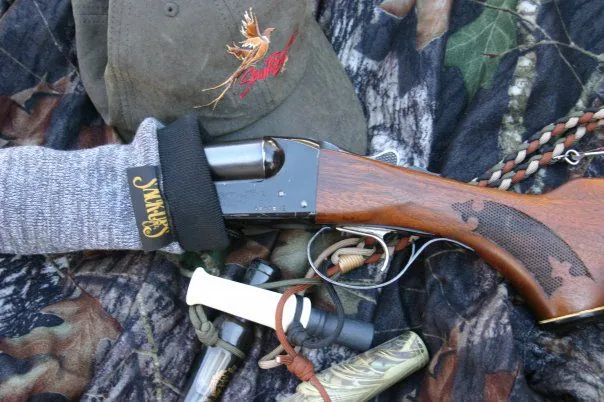
Protection between pieces matters most where a safe gets busy. A soft sleeve can reduce contact during storage and transport, especially when rifles and shotguns share a narrow space. Sack-Ups' cotton storage approach is designed to provide a soft layer while helping manage the everyday moisture concerns that come with stored metal and wood.
Keep moisture control visible and maintainable
Gun safe organization is also about making maintenance hard to forget. Put your chosen moisture-control method where you can see it during a quick check. That may be a rechargeable dehumidifier, desiccant container or another option approved for your safe. Follow its instructions for placement, recharging and replacement. Do not bury it behind cases, boxes or stacked gear.
Good airflow matters as well. Avoid packing the safe so tightly that every shelf is pressed against fabric, cardboard or gear bags. Damp items should not go straight from a rainy range day or a humid hunt into closed storage. Let them dry, inspect them and complete any manufacturer-recommended care first.
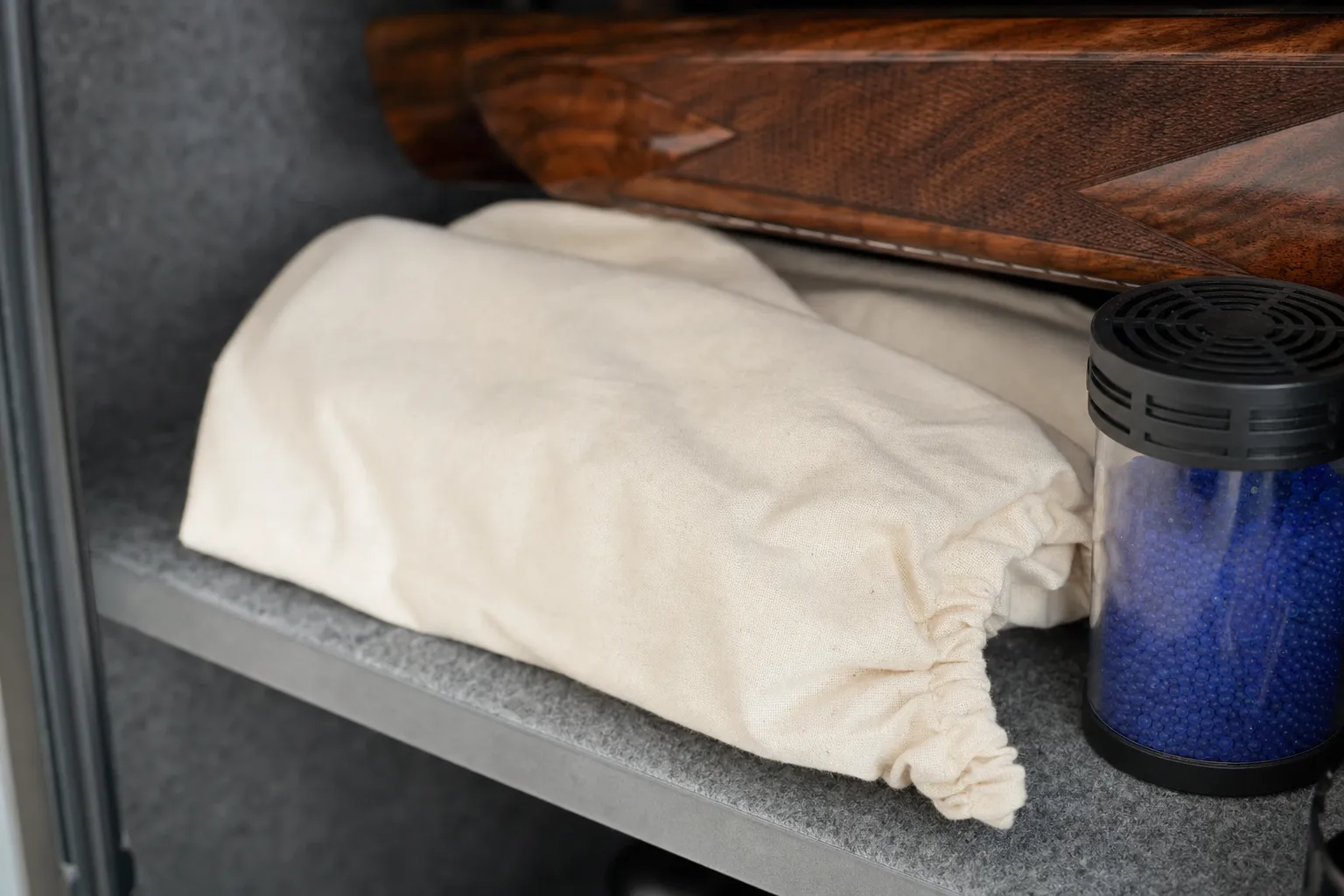
Set a calendar reminder to inspect the safe on a routine schedule. During each check, look for signs of moisture, dust, abrasion, worn sleeves and items that have slowly drifted out of their zone. A short inspection is easier than a major reorganization, and it gives you a chance to catch small concerns before they become lasting finish damage.
Separate cleaning supplies from stored firearms
Cleaning supplies should be organized, sealed and kept where they cannot leak or rub against firearms. Use a small tray or a dedicated shelf rather than storing bottles loose beside stocks and cases. Keep oily rags, solvents and other maintenance materials according to their labels and away from ignition sources. When in doubt, follow the product instructions and local disposal guidance.
This separation also makes post-cleaning storage more deliberate. After cleaning, allow the firearm and any cloth or sleeve to be dry before putting it away. Store the maintenance products, close the container and return the firearm to its assigned position. That repeatable order is what keeps a safe organized month after month.
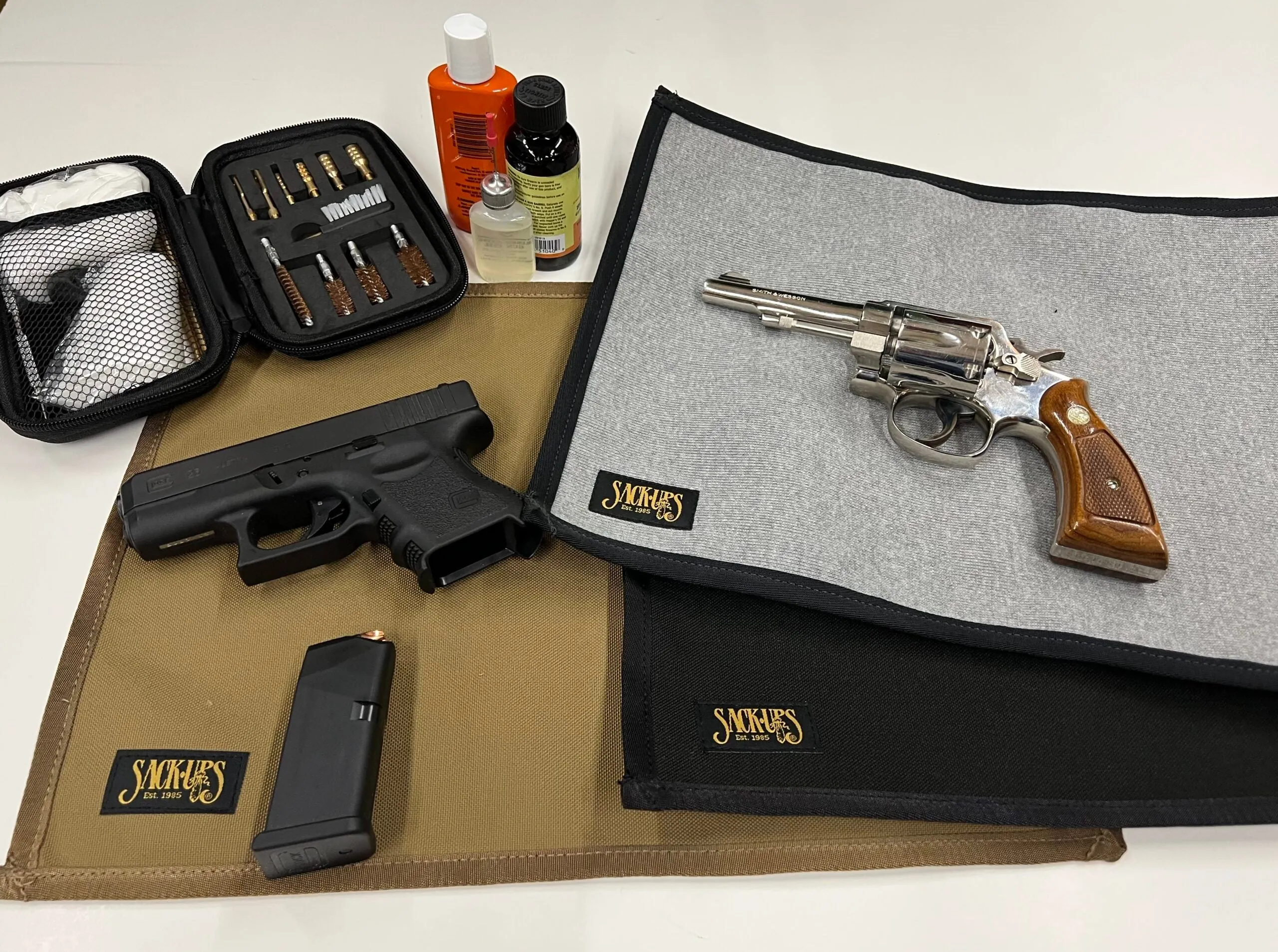
For the care products that belong with a firearm collection, Sack-Ups offers a Gun Maintenance collection with silicone treatment and Gunwipes. Keep those items accessible enough to use, but not loose among the firearms you are trying to protect.
Use protective sleeves with a purpose
A protective sleeve is not a substitute for secure storage, routine inspection or proper firearm care. It is a useful layer between a firearm and the busy surfaces around it. In a collection where long guns sit close together, sleeves help reduce the rubbing that can happen when pieces are moved in and out of the safe.
Choose a sleeve that fits the firearm without forcing optics, slings or stocks into a tight space. Sack-Ups has options for rifles, shotguns, handguns and scoped firearms, along with the size guidance needed to narrow the choice. If you are storing a collection with several lengths, label the shelf or use a consistent left-to-right order instead of guessing each time.
The advantage is practical: a firearm can leave the safe, travel to the range or field and return to the same protected position. That routine makes the collection easier to keep orderly and helps reduce the casual contact that happens in a crowded safe.
Use a layout that matches your collection
There is no single correct gun safe layout. A hunter with two shotguns and a few seasonal rifles may want one open long-gun bay with a clear top shelf for accessories. A collector with several handguns may get more value from protected shelf positions than from trying to add another long-gun rack. A family safe may need its most important feature to be consistent secure access, not maximum capacity.
Start with the broadest category first. Put long guns together by height, with the tallest or widest pieces where the safe gives them the best clearance. Then decide whether handguns are better stored on a shelf, in a purpose-built organizer or in their own protected sleeves. Keep paperwork, spare keys and maintenance records in a dry location that is easy to find but does not crowd the firearms.
When the safe is full, the answer is not always another accessory. It may be a second storage location, fewer stored cases or a more realistic plan for the collection. The point of organization is to make every item visible, reachable and protected. If a safe is so packed that you cannot inspect what is inside, it is time to simplify.
Make a simple reset routine
The easiest gun safe organization ideas are the ones you can keep doing. A quick reset after each use can take only a few minutes:
- Confirm the firearm is handled and stored according to the manufacturer's guidance and applicable laws.
- Wipe away obvious dirt, moisture or fingerprints before it returns to the safe.
- Check that the sleeve or storage position is dry and clear of debris.
- Return the firearm to its assigned zone with enough clearance from neighboring pieces.
- Close and secure the safe, then put keys or access controls back in their normal place.
Once the system is in place, do a larger review every season. Recheck lengths when you add scopes or accessories. Remove unused boxes. Replace worn dividers. Refresh moisture-control supplies as needed. An organized safe is not a one-time project. It is a small routine that protects the collection you have built.
How Sack-Ups fits into an organized safe
Sack-Ups is made for the moment between use and storage. The silicone-treated cotton blend gives firearms and other valued gear a soft layer of protection during storage and transport. For a safe that holds rifles, shotguns, handguns or scoped firearms, the right sleeve helps each piece return to a clear, protected position instead of resting directly against the items around it.
Use the full Sack-Ups catalog to compare storage options, or start with the fit guide when you know the firearm type and length. A well-organized safe is easier to use. The right storage layer helps it stay that way.
Frequently asked questions
What is the best way to organize a gun safe?
Start by grouping firearms by type, size and how often they are used. Give long guns, handguns, maintenance supplies and documents separate zones. Leave enough room to remove one firearm without rubbing it against the next, and keep moisture-control supplies visible for routine checks.
Should firearms touch each other in a gun safe?
It is better to avoid regular contact between firearms. Clearance and dividers make it easier to remove a firearm without dragging it across another finish. A properly fitted protective sleeve can add a soft layer where closely stored firearms need extra separation.
How often should I reorganize my gun safe?
Do a quick reset whenever you return a firearm to storage, then inspect the safe more thoroughly every season or whenever storage conditions change. Check for moisture, dust, worn storage materials, crowded rows and items that no longer fit their assigned space.
Can a gun sock be used inside a gun safe?
A gun sock can be a useful protective layer inside a secure gun safe when it fits the firearm properly and is kept clean and dry. It does not replace secure storage, routine inspection or the firearm manufacturer’s care guidance.