Good fishing rod storage is less about building a showpiece and more about making the next trip easier. A rod that has a dry, protected place to rest is less likely to get stepped on, tangled with another setup or knocked into a wall while you move other gear. The right arrangement also makes it easier to see what you own, grab the setup you want and notice when a guide, reel or sleeve needs attention.
The best setup depends on where the rods live between trips. A few regularly used spinning rods in a closet need something different from a wall of bass gear in a garage, a set of fly rods in tubes or a collection that spends part of the year in a boat or RV. Start with the space, the number of rods and how often each one is used. Then give every rod a predictable place, enough clearance from hard gear and a routine for drying it before storage.
Start with clean, dry gear
Before choosing a rack, make sure the equipment is ready to be put away. Sand, mud, plant matter, water and salt residue can travel home from a perfectly good day on the water. Do not hide that mess inside a rod sleeve, tube or crowded corner. Give rods and reels a quick inspection, follow their manufacturer’s care instructions and let everything dry before it goes into a closed storage spot.
The Texas Parks and Wildlife fishing-gear care guide advises anglers to inspect rods after use, rinse and dry them thoroughly, and use extra care with saltwater equipment. It also recommends loosening reel drag for storage after the reel has been cleaned and lubricated according to the maker’s guidance. Those small steps give a rack, sleeve or rod tube a chance to do its job instead of trapping the problem out of sight.
For saltwater gear, do not put off the rinse and dry step. Salt residue affects more than the rod blank. Guides, reel seats, hooks and reel hardware all deserve attention. Keep wet tackle boxes open until their contents are dry, and keep a damp rod away from fabric covers and enclosed compartments until you are confident the moisture is gone.
Choose storage by how you use the rod
Divide the collection into three simple groups: rods you use often, rods that are ready for a specific season and rods that are traveling or sitting for a longer stretch. This avoids one common mistake, treating every rod as if it needs to be stored in exactly the same way.
Frequently used rods should be easy to take down and return without catching on the other setups. A wall rack, a stable freestanding rack or a cabinet with enough room around the reels can work well. The goal is quick access without a pile of rods leaning together in a corner. If pulling one rod out requires moving five others, the system is asking to be ignored.
Seasonal or specialty rods can live in a higher, less convenient area, provided that spot remains dry, protected from accidental contact and easy enough to inspect. A rod tube or a protective sleeve is especially helpful when rod sections, reels or other hard gear share that space. Traveling rods need another layer of thought. Use the right case or tube for the trip, and make sure the gear cannot be pinched by a tailgate, vehicle door, cooler or tackle box on the way there.
Wall racks keep an active collection visible
A wall rack works well when you fish regularly and have a clear stretch of wall in a dry area. It gets rods off the floor, separates them from bikes, tools and boxes, and makes it easier to choose a setup before you leave. Mount the rack securely for its intended weight and use the manufacturer’s instructions for spacing and hardware. The rack is only as dependable as its attachment to the wall.
Leave enough room between rods for handles, guides and reels. A rack that technically holds ten rods may be a poor choice if each rod has to scrape past its neighbor to come out. Group rods by the way you use them, such as freshwater spinning, baitcasting, fly or surf gear, so a quick glance tells you where to reach. Labels can help when multiple family members share the same area, but a simple, repeatable layout is usually more useful than a collection of tags.
Keep the rack away from obvious hazards: a doorway swing, the path to a workbench, a hot water heater, a leaky wall or the place where ladders and garden tools get parked. A rod rack should reduce the chance of an accident, not simply move the rods to a more photogenic version of the same busy corner.
Use ceiling storage carefully in garages
Ceiling-mounted storage can reclaim wall space in a garage, but it is best for rods you do not need every day. Before choosing it, measure the longest rod and reel combination, the ceiling height, the vehicle clearance and the path required to get the rod down safely. A rod should not hang where a car door, garage door, ladder or raised hatch can strike it.
Make the retrieval process part of the decision. If a rod has to be forced through an awkward gap, it is more likely to get bumped or left somewhere less protected after a trip. Ceiling storage works best when each slot supports the rod securely, the release is straightforward and the rods can be returned without balancing on a vehicle or reaching over heavy equipment.
Garages can have wider swings in temperature and moisture than the rest of the home. Check the area after heavy rain, seasonal changes or a wet trip. If the space stays damp, has a leak or exposes gear to direct sun for long periods, look for a more stable indoor location. Organization is helpful, but a dry, predictable environment is the real foundation of long-term care.
Make a closet, cabinet or fishing room work harder
Indoor storage can be a good fit for a smaller collection, valuable rods or equipment that needs to stay away from the garage’s traffic and conditions. A closet wall, tall cabinet or dedicated fishing-room section can hold a compact rack while keeping rods near tackle, line and the small items needed for the next trip.
Start by clearing the floor. Rod tips and guide rings are easy to catch on shoes, bags and boxes. Then give rods their own vertical or horizontal zone and keep heavy objects, such as coolers and tackle boxes, on separate shelves. If you use rod tubes, store them where they will not roll, collect dampness or become the bottom layer of a heavy stack.
A small shelf or bin for reels, line and maintenance supplies can make the whole space calmer. Keep cleaning products closed and follow their labels. Keep hooks and lures in containers where they cannot snag sleeves or line. The storage area does not need to look like a retail wall. It needs to let you see the equipment’s condition and remove one piece without disturbing the rest.
Give travel and rod tubes a clear role
Rod tubes and hard travel cases are useful when the trip itself creates the biggest risk. They can protect rod sections and guides from the bumps, pressure and crowded loading that happen in a vehicle, boat, airport or shared storage space. They are not a reason to pack wet gear tightly and forget about it. Open the case when you return, let the rod and case dry, then inspect the contents before the next trip.
For fly rods and multi-piece rods, keep every section, tube and reel together in a predictable order. That makes a missing piece much easier to spot before you leave home. For assembled rods, think about what can touch the guides and reel during loading. A soft protective layer helps reduce ordinary contact, while a proper tube or hard case handles the risks that require more structure.
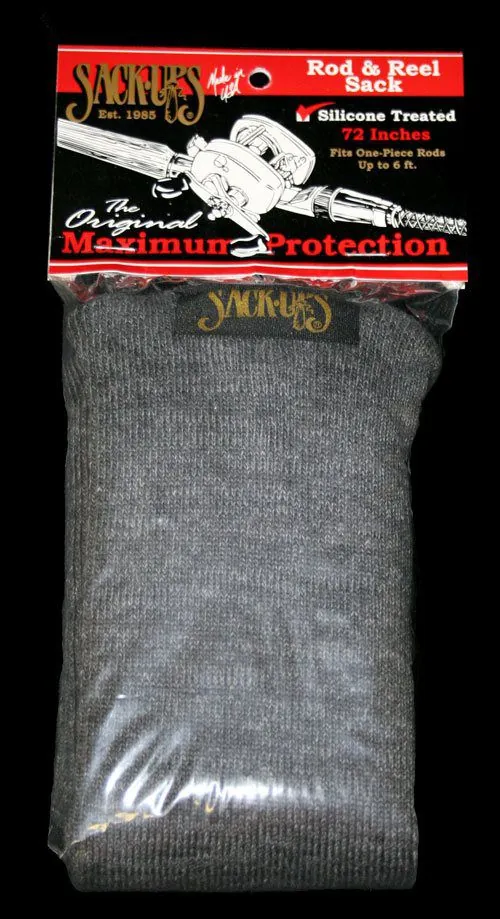
Sack-Ups offers fishing rod sleeves and covers for rods, reels, tubes and tackle. A sleeve is most useful after the rod is clean and dry, when it can create a softer boundary between the setup and the other gear around it. It is not a substitute for a travel tube, a secure rack or the basic care the rod and reel need after use.
Protect the points where damage usually starts
Most storage damage is not dramatic. It happens when one rod slides against another, a guide catches on a strap, a reel handle digs into a nearby blank or a rod is left where someone can step on it. Look at your space with those moments in mind. Where do rods cross? Which piece has to move first? What shifts when someone reaches for a cooler or a bike?
Use two simple protections together: separation and coverage. Separation means the rack, cabinet or shelf gives each setup enough room to be removed without rubbing past the others. Coverage means a dry, fitted sleeve or tube protects the rod from the ordinary contact that can still happen during loading, unloading and storage. One does not replace the other. Together, they make the storage routine much more forgiving.
Pay extra attention to rod tips, guides and reel handles. They are often the first parts to hit a wall, snag on loose line or tangle with a neighbor. Keep line secured before storage, do not let lures swing loose and use a rod keeper or other appropriate restraint where it helps keep the setup controlled. A few seconds of preparation is easier than sorting out a tangle when the weather is good and you want to leave.
Set up a simple seasonal check
Rods that sit for a season deserve a quick check before they disappear into the background. Start with the storage space itself. Look for dust, a damp floor, a musty smell, signs of pests, a leak or anything leaning where it should not. Then inspect the rod blank, guides, handle, reel seat, line and sleeve. You are not trying to turn storage into a repair project. You are looking for a change early enough that the next step is obvious.
Clean and dry the equipment as the manufacturer recommends. Back off the drag only if that matches the reel maker’s guidance. Replace worn line when appropriate, and remove old bait or damp tackle from bags and boxes. If you see corrosion, a cracked guide insert, a loose guide or a damaged reel seat, pause before the next trip and get the right repair advice. Storing a problem neatly does not make it less of a problem.
For the rest of the year, keep the check short. After a saltwater outing, wet-weather trip or long break, make sure the gear returns clean and dry. That is enough to protect the time you put into choosing each rod and to make the next fishing day start with less friction.
A practical fishing rod storage plan
The best fishing rod storage ideas are the ones that fit the actual space and make care easier to repeat. A wall rack may be perfect for active rods. A cabinet or closet can protect a smaller collection from a busy garage. A tube or case can handle a demanding trip. The unifying idea is simple: keep rods dry, separated from hard contact and easy to inspect.
- Clean and dry rods, reels and tackle before closed storage, especially after saltwater use.
- Give frequently used rods an accessible rack or holder with enough clearance to remove one at a time.
- Keep stored rods off the floor and away from doors, vehicles, tools, heat and damp walls.
- Use tubes or hard cases for travel risks, then open and dry them after the trip.
- Use a clean, dry sleeve as a soft layer around a rod, reel or tube when gear shares a storage area.
- Check seasonal gear after weather changes, leaks or a long stretch between trips.
A clear place for every rod makes it easier to protect the gear you already own and easier to enjoy it when the next chance to fish arrives. Start with one part of the collection, make that area work, then extend the same simple habits as your gear grows.
Frequently asked questions
What is the best way to store fishing rods?
The best method is the one that keeps each rod clean, dry, supported and easy to remove without rubbing against other gear. An accessible wall rack can work well for active rods, while a cabinet, closet, rod tube or travel case may better suit seasonal or traveling equipment.
Should fishing rods be stored with reels on?
That depends on the rod, reel and storage space. If the reel stays on, give it enough clearance so the handle and body do not press into another rod or hard gear. Follow the reel manufacturer’s care guidance, including cleaning and storage advice after use.
Can I store fishing rods in a garage?
Yes, if the garage area stays dry, avoids direct hazards and gives the rods secure support. Keep them away from vehicles, doors, leaks, extreme heat and crowded floor storage. Inspect the space after wet weather and seasonal changes.
Do fishing rods need to be dry before storage?
Yes. Dry the rod, reel and any sleeve or case before enclosed storage. This is especially important after saltwater use or a wet trip, when moisture and residue can affect guides, reel hardware and nearby tackle.